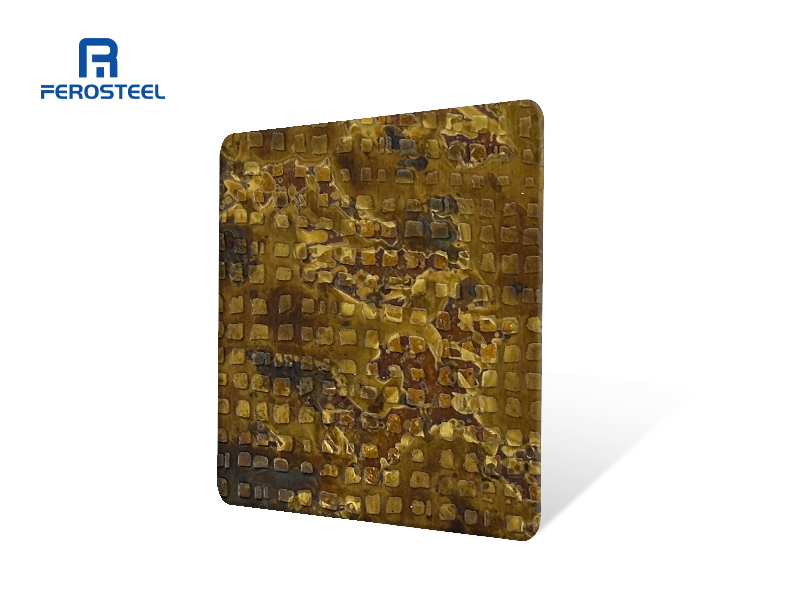
When an automotive exhaust system operates at high temperature, heat protection becomes an important part of vehicle design. Exhaust pipes, catalytic converters, mufflers and turbocharger components can generate substantial radiant and conductive heat, which may affect nearby wiring, plastic components, fuel lines and other sensitive parts.
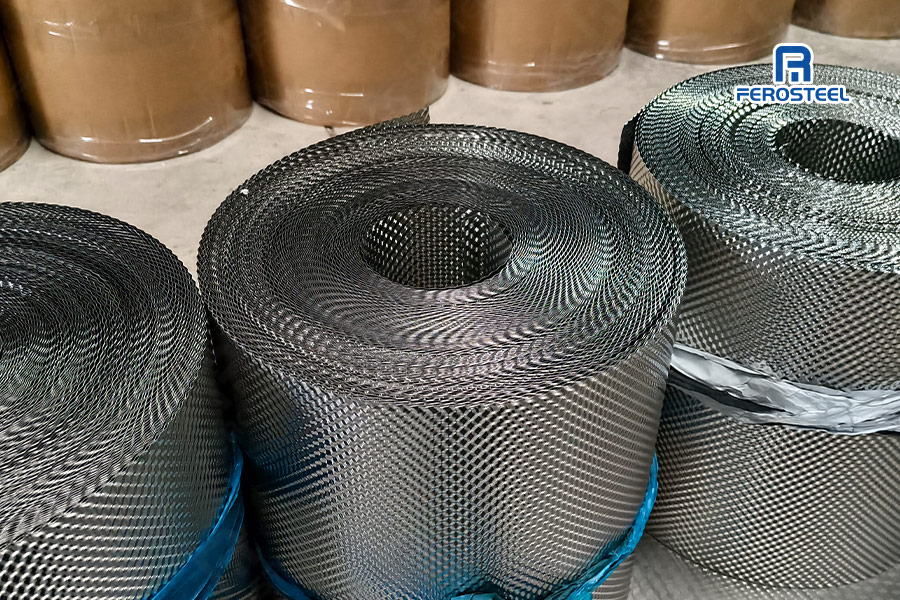
An embossed stainless steel heat shield provides a practical solution for these applications. Compared with a flat metal sheet, an embossed sheet has a structured surface that improves rigidity while maintaining a lightweight design.
For automotive manufacturers, exhaust component suppliers, aftermarket manufacturers and thermal insulation distributors, material grade, thickness, embossed pattern, width and processing method should all be considered before selecting a heat shield material.
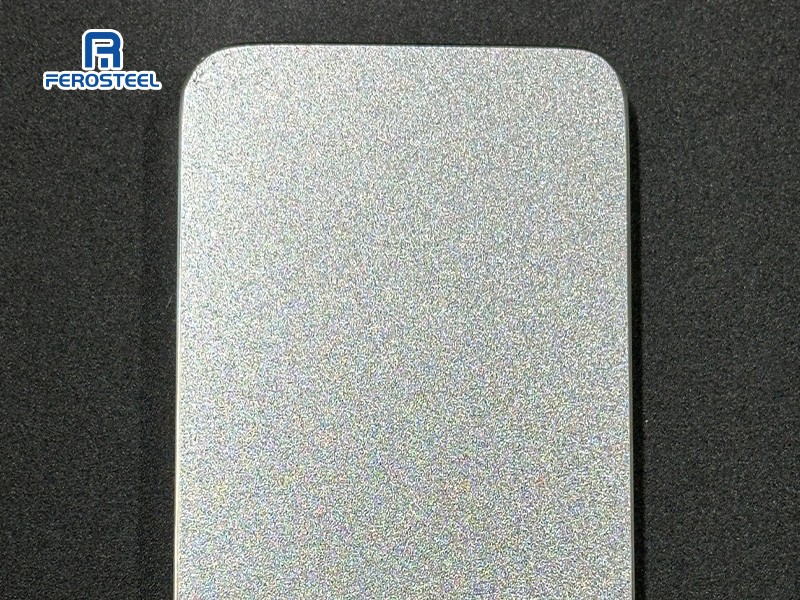
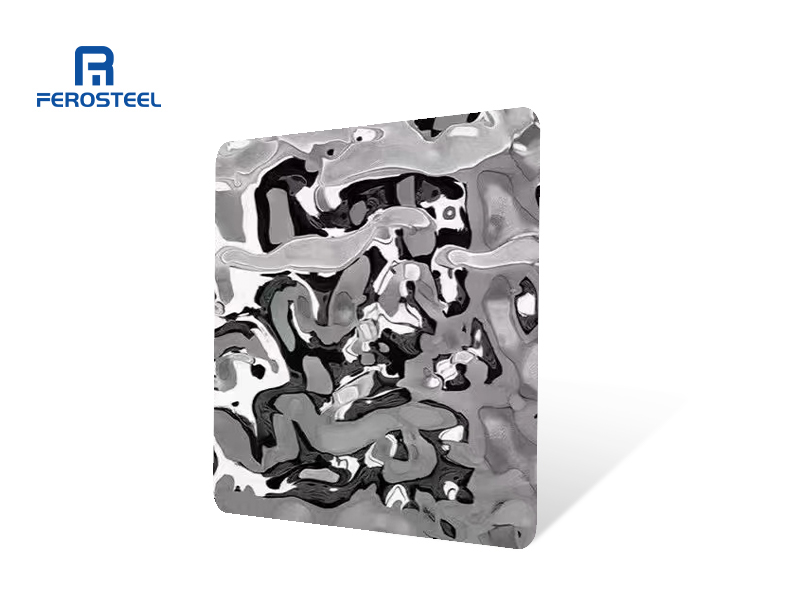
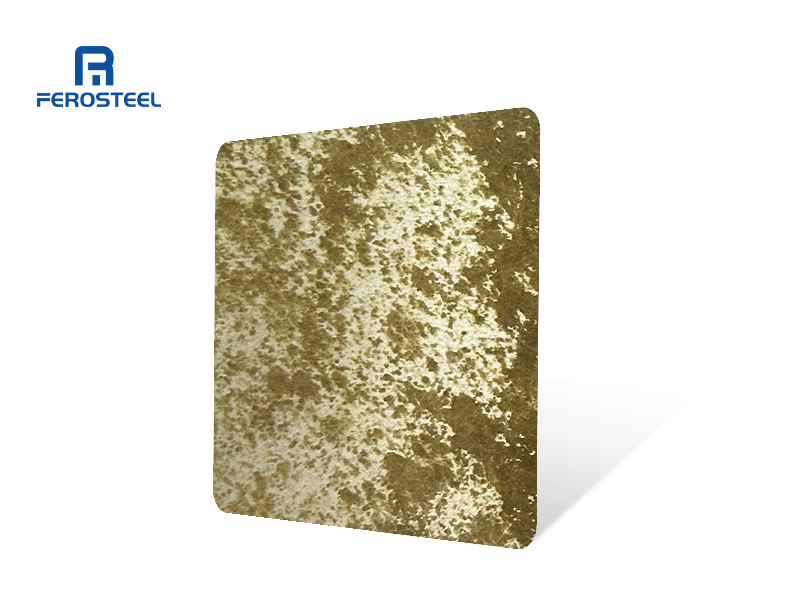
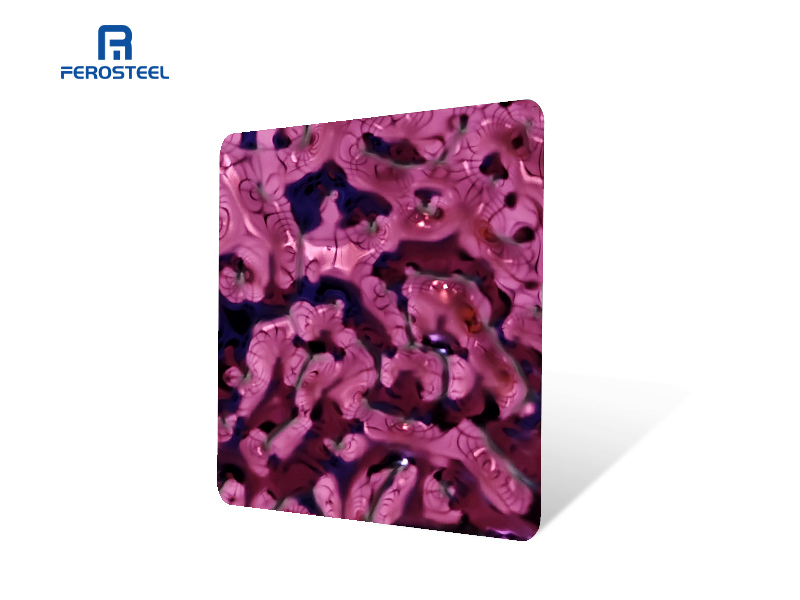
An embossed stainless steel heat shield is a thin stainless steel sheet formed with a raised surface pattern. The pattern can be designed as a round-bean, diamond, 5-bar or other customized structure depending on the application.
The main purpose is not decoration. The embossed structure provides additional rigidity and helps the sheet maintain its shape when exposed to vibration, thermal cycling and mechanical stress.
For automotive applications, ultra-thin stainless steel is particularly useful because it can provide thermal protection without adding unnecessary weight.
For example, Ferosteel supplies 304 stainless steel embossed heat shield sheets with thicknesses of approximately 0.10–0.15 mm for automotive exhaust systems. The material can be stamped, cut, bent and formed according to customer requirements.
304 stainless steel is widely used in industrial and automotive applications because it combines corrosion resistance, mechanical strength and good formability.
For an exhaust heat shield, the material needs to perform under several conditions at the same time.
Automotive exhaust components operate in high-temperature environments, particularly around turbochargers, catalytic converters and exhaust manifolds.
A properly selected stainless steel heat shield can help separate hot exhaust components from nearby sensitive parts and reduce unwanted heat transfer.
Ferosteel's 304 ultra-thin embossed stainless steel heat shield is designed for high-temperature automotive applications and is specified for temperatures above 850°C under suitable application conditions.
Traditional thick metal heat shields can add unnecessary weight.
An ultra-thin stainless steel heat shield using material around 0.10–0.15 mm can reduce material consumption while still providing a stable protective barrier.
This is particularly useful for automotive components where weight, installation space and forming capability are important considerations.
Automotive heat shields can be exposed to moisture, road salt, exhaust gases and other environmental conditions.
304 stainless steel provides good corrosion resistance for many automotive and industrial applications, helping the heat shield maintain its structural performance over time.
One advantage of embossed stainless steel is the three-dimensional surface.
Compared with a completely flat sheet, embossing can increase rigidity and help reduce deformation and vibration.
This is important for exhaust applications because heat shields may be exposed to continuous engine vibration and thermal expansion.
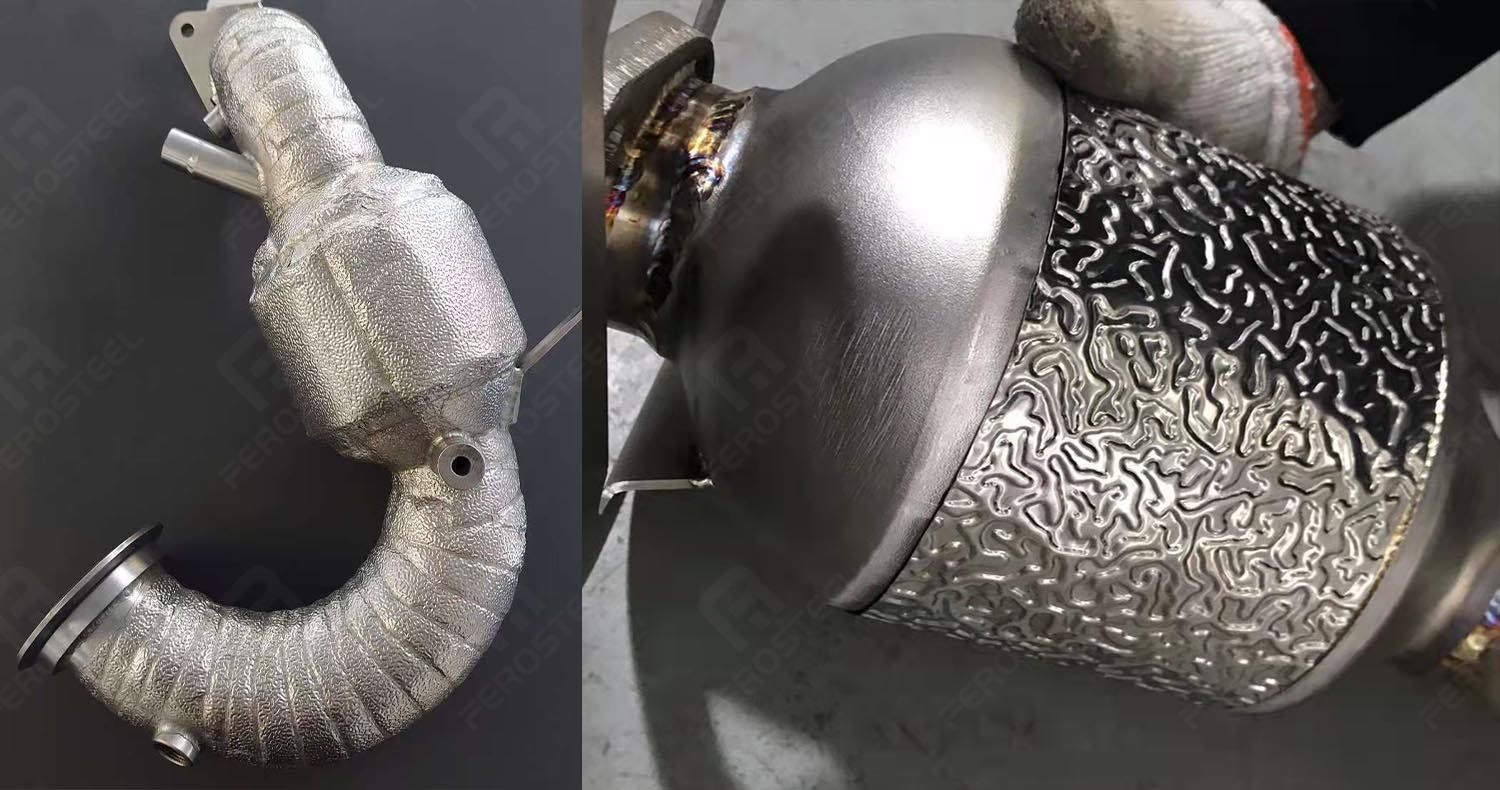
Embossed stainless steel heat shield sheets can be used in several areas of automotive thermal management.
The most common application is exhaust system thermal protection.
Typical installation areas include:
The heat shield creates a protective barrier between high-temperature exhaust components and surrounding vehicle parts.
Heat generated by engines and exhaust components can affect nearby plastic components, electrical wiring and hoses.
A thin embossed stainless steel heat shield can be formed into a custom panel and installed around heat-sensitive areas.
The underside of a vehicle is exposed to exhaust heat and road conditions.
Stainless steel heat shield panels can be designed for underbody applications where corrosion resistance, strength and low weight are important.
Thermal management is also becoming increasingly important in electric and hybrid vehicles.
Heat protection may be required around battery systems, power electronics, electric drive components and other thermal management areas.
The exact material and thickness should be selected according to the temperature, distance from the heat source and installation structure.
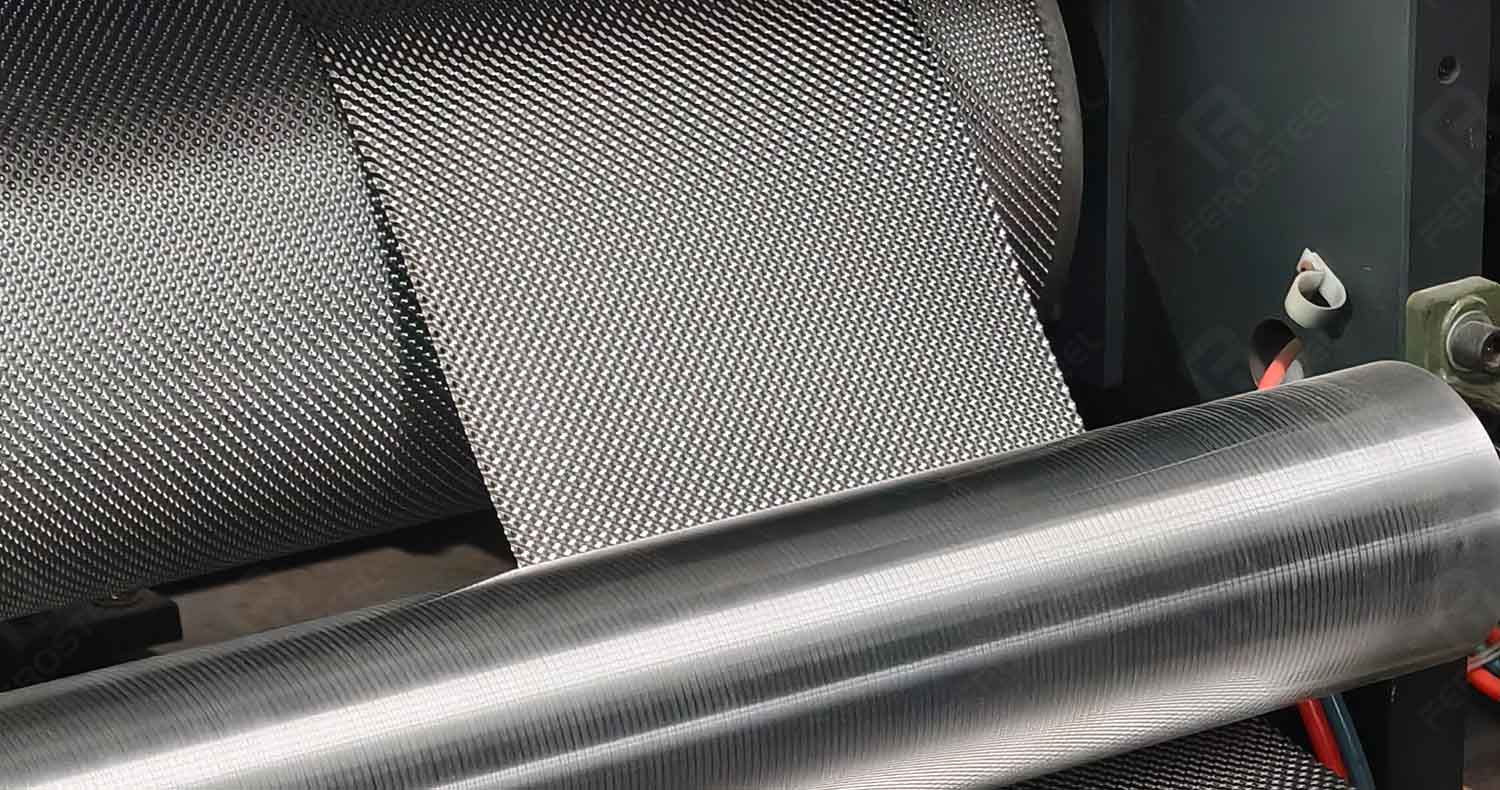
Stainless steel and aluminium are both used for automotive heat protection, but they are suitable for different design requirements.
Aluminium has the advantage of lower weight and good heat reflection. Ferosteel's embossed aluminium heat shield products are available in approximately 0.5–0.8 mm thickness, with widths from 100–1250 mm, and can be supplied as coils or sheets.
Embossed Aluminium Heat Shield Coil for Automotive Exhaust and Thermal Insulation Applications
Stainless steel, on the other hand, offers higher mechanical strength and is often selected when the heat shield needs greater structural stability, durability or resistance to mechanical stress.
For procurement teams, the correct choice depends on:
There is no single material that is suitable for every heat shield application.
Thickness is one of the most important specifications when purchasing an embossed stainless steel heat shield.
For lightweight automotive exhaust applications, ultra-thin stainless steel can be used.
A typical specification for Ferosteel's automotive embossed stainless steel heat shield is:
| Specification | Typical Value |
|---|---|
| Material | 304 Stainless Steel |
| Thickness | 0.10–0.15 mm |
| Surface | Embossed |
| Width | Around 600 mm |
| Form | Coil / Sheet |
| Application | Automotive Exhaust Heat Shield |
| Processing | Cutting, Stamping, Bending, Forming |
| MOQ | 25 kg |
The exact thickness should be selected according to the required stiffness, mounting method, distance from the heat source and operating environment.
For high-volume automotive production, coil material can also be useful because it can be integrated into continuous stamping and forming processes.
For buyers specifically looking for 0.1mm or 0.15mm stainless steel heat shield material, Ferosteel offers a 304 stainless steel embossed sheet designed for automotive exhaust applications.
304 Ultra-thin Embossed Stainless Steel Heat Shield Sheet for Automotive Exhaust System
The product is available in 0.10–0.15 mm thickness and can be customized according to production requirements. Available applications include exhaust heat shields, engine compartment liners, underbody thermal barriers, muffler insulation covers and other automotive thermal protection components.
The embossed surface also provides additional structural stiffness compared with an equivalent flat sheet.
Not every exhaust component requires a rigid sheet.
For cylindrical exhaust pipes, flexible insulation sleeves or wraps can be easier to install.
A multi-layer 304 stainless steel exhaust insulation wrap can be used when the customer needs flexible coverage around pipes, generators, marine exhaust systems or other cylindrical high-temperature components.
304 Stainless Steel Exhaust Heat Insulation Wrap Cover – High Temperature Resistant Sleeve
This type of product is different from an embossed stainless steel heat shield sheet.
A sheet is normally selected when the application requires a formed or stamped rigid panel, while a wrap or sleeve is more suitable for flexible cylindrical insulation.
Embossing is not limited to one surface design.
Depending on the application, manufacturers may use:
The pattern can affect stiffness, appearance, flexibility and forming performance.
For OEM applications, customized patterns can be developed according to drawings, tooling requirements and production specifications.
Yes.
For automotive and industrial customers, customization is often more important than purchasing a standard sheet.
Depending on the project, manufacturers can provide customization for:
For example, a buyer may require a 600 mm wide coil for continuous stamping, while another customer may require pre-cut panels for direct installation.
This is why it is important to provide the supplier with the application, dimensions, temperature requirements and expected annual quantity before requesting a quotation.
If you are sourcing embossed stainless steel heat shield material for automotive production, the following information can help the supplier provide a more accurate quotation:
For example, a request such as:
304 stainless steel, 0.10 mm thickness, 600 mm width, embossed surface, automotive exhaust heat shield, coil format, 500 kg requirement
provides much more useful information than simply asking for a “stainless steel heat shield price.”
Ferosteel supplies embossed stainless steel and aluminium heat shield materials for automotive and industrial applications.
The company supports customized material specifications, embossed patterns, widths and processing requirements.
For customers purchasing stainless steel heat shield materials in bulk, the production process can be matched to stamping, cutting, bending and other downstream manufacturing requirements.
The product range includes ultra-thin 304 stainless steel heat shield sheets, embossed aluminium heat shield coils and flexible stainless steel exhaust insulation products.
An embossed stainless steel heat shield is a thin stainless steel thermal barrier with a raised surface pattern. The embossed structure increases rigidity and can help the material maintain its shape under vibration and thermal cycling.
Yes. 304 stainless steel is commonly selected for applications requiring corrosion resistance, mechanical strength and good formability. The final grade and thickness should be matched to the actual temperature and application conditions.
Ferosteel's automotive 304 embossed stainless steel heat shield is available in approximately 0.10–0.15 mm thickness.
Yes. Coil supply can be useful for continuous stamping, cutting and automated production processes.
Yes. Customized embossed patterns, widths, thicknesses and processing options can be discussed according to production requirements.
It depends on the application. Aluminium provides a lightweight solution with good heat reflection, while stainless steel generally provides greater mechanical strength and durability. Temperature, weight, installation space and forming requirements should all be considered before selecting the material.
An embossed stainless steel heat shield is more than a simple piece of sheet metal. The combination of stainless steel grade, ultra-thin thickness and embossed structure makes it suitable for demanding automotive thermal protection applications.
For exhaust systems, engine compartments, underbody components and other high-temperature areas, the correct heat shield specification can improve thermal protection while keeping the component lightweight and easy to process.
For buyers looking for 304 embossed stainless steel heat shield sheet, ultra-thin stainless steel heat shield, stainless steel exhaust heat shield material or custom automotive heat shield panels, Ferosteel can provide customized sheet and coil solutions based on thickness, width, pattern, application and production quantity.
 Office address: 26 Floor, Shibo Financial Center, Fenjiang South Road No.38, Chancheng, Foshan, GuangDong, China
  Phone
: +86 -18024913898
Phone
: +86 -18024913898 البريد الإلكتروني
: [email protected]
البريد الإلكتروني
: [email protected]


 IPv6 دعم الشبكة
 اترك رسالة