When customers buy stainless steel for kitchens, food factories, countertops, or decorative projects, one question always comes up:
Should you choose 304 stainless steel or 316 stainless steel?
Both materials are called food-grade stainless steel, and both are widely used in the market. But in actual projects, their applications, prices, and corrosion resistance are different.
In this article, we’ll explain what 304 stainless steel grade is, the difference between SS304 and SS316, and compare their mechanical properties in a practical way.
Food-grade stainless steel refers to stainless steel materials that are safe for direct food contact. These materials need to meet several basic requirements:
Among all stainless steel grades, 304 and 316 are the two most common food-grade materials.
You can find them in:
304 Stainless Steel is the most commonly used stainless steel grade in the world.
It belongs to the austenitic stainless steel family and is often called “18/8 stainless steel” because it contains around:
This combination gives SS304 good corrosion resistance and stable performance in normal environments.
304 stainless steel performs well in most indoor environments. It can resist:
For kitchens, restaurants, and interior decoration projects, SS304 is usually more than enough.
304 stainless steel is easy to:
That’s why many decorative stainless steel sheet manufacturers prefer using 304 material for custom finishes.
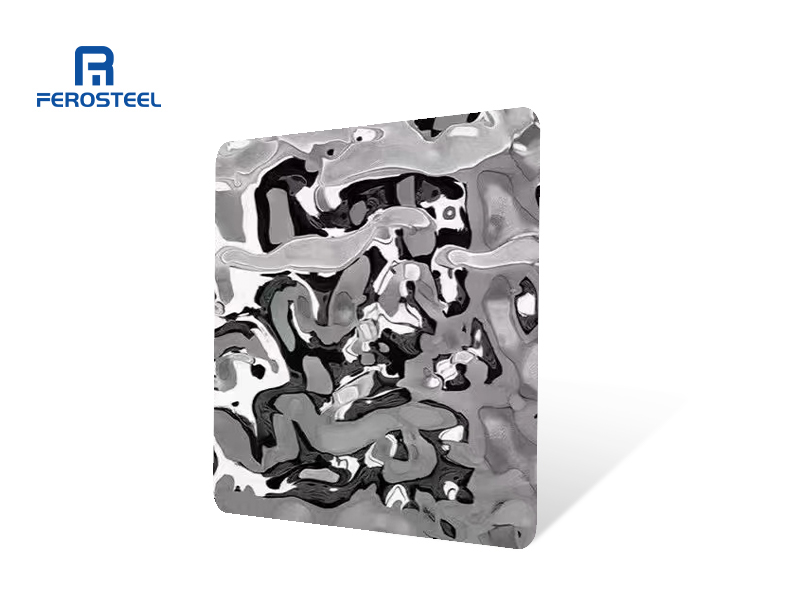
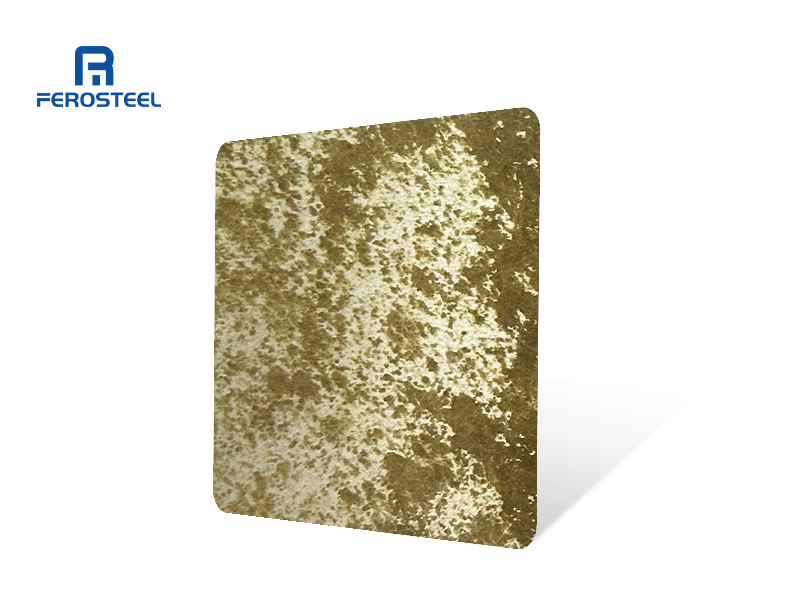
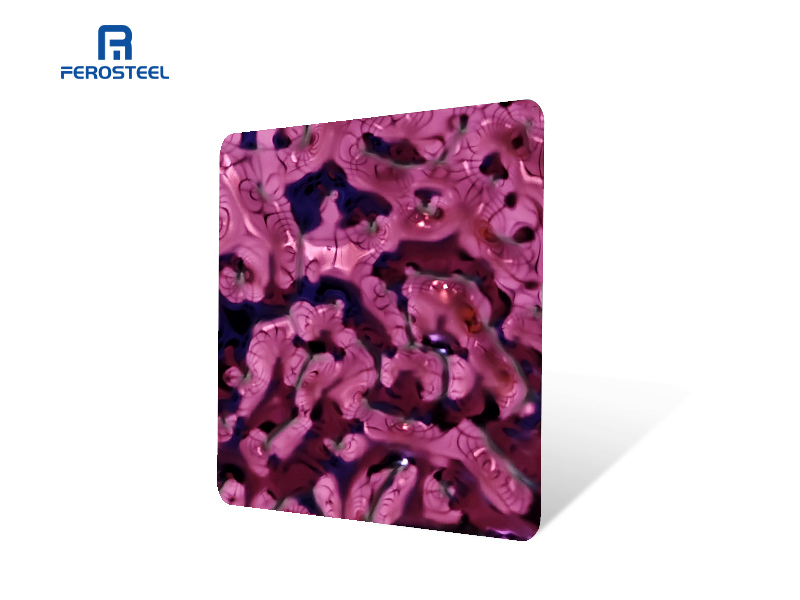
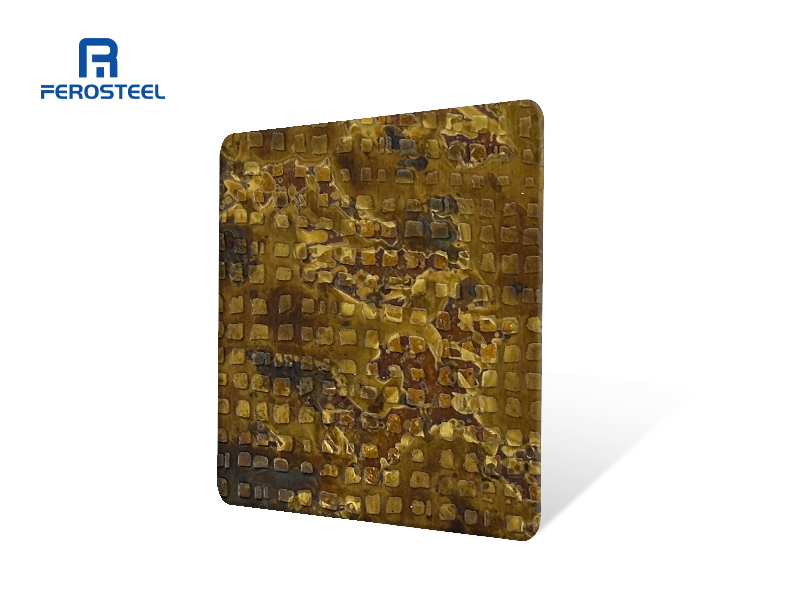
304 stainless steel can be processed into different surface finishes, including:
For example, companies like Ferosteel supply decorative SS304 sheets for hotels, shopping malls, restaurants, elevators, and commercial interiors.
316 Stainless Steel is considered an upgraded version of 304 stainless steel.
The biggest difference is that SS316 contains molybdenum.
This extra element improves resistance against:
Because of this, 316 stainless steel is commonly used in marine and coastal projects.
Many people think 316 stainless steel is much stronger than 304, but actually their mechanical strength is very close.
The main difference is corrosion resistance.
| Material | Chromium | Nickel | Molybdenum |
|---|---|---|---|
| SS304 | 18–20% | 8–10.5% | No |
| SS316 | 16–18% | 10–14% | 2–3% |
The molybdenum inside 316 stainless steel gives it better resistance to salt and chemical corrosion.
| Property | SS304 | SS316 |
|---|---|---|
| Tensile Strength | 515 MPa | 515 MPa |
| Yield Strength | 205 MPa | 205 MPa |
| Elongation | 40% | 40% |
| Hardness | ≤201 HB | ≤217 HB |
| Density | 8.0 g/cm³ | 8.0 g/cm³ |
From the table, you can see that the mechanical properties are very similar.
In real projects, the choice between 304 and 316 is usually based on the environment rather than strength.
304 stainless steel is suitable for:
If the environment is dry or normal humidity, SS304 is usually the most cost-effective option.
316 stainless steel is recommended for:
In these environments, 304 stainless steel may develop rust spots over time, while 316 performs much better.
Yes. 304 Stainless Steel is widely accepted as a food-safe material.
It is commonly used for:
As long as the material quality meets the standard, SS304 is completely safe for food contact.
In the market, common identification methods include:
A simple magnet test is not always accurate because both grades can show slight magnetic properties after processing.
304 and 316 stainless steel are both excellent food-grade materials, but they are used in different situations.
For most kitchen equipment, decorative stainless steel sheets, and commercial interior projects, 304 stainless steel is the standard choice.
However, if your project is located near the sea or exposed to harsh chemicals, 316 stainless steel is the safer long-term option.
If you are looking for decorative stainless steel sheets in 304 or 316 grade, including mirror, hairline, embossed, etched, and PVD finishes, manufacturers like Ferosteel can provide customized solutions for architectural and interior projects worldwide.
Not necessarily. 304 is more cost-effective for normal environments, while 316 is better for high-corrosion conditions.
Because it contains molybdenum and higher nickel content, which increase material cost.
Under normal indoor conditions, 304 resists rust very well. However, in coastal or high-salt environments, rust spots may appear over time.
304 stainless steel is the most commonly used material for kitchen countertops because it offers a good balance between price and performance.
Yes. 316 stainless steel is also food grade and is often used in pharmaceutical and marine-related food processing environments.
Office address: 26 Floor, Shibo Financial Center, Fenjiang South Road No.38, Chancheng, Foshan, GuangDong, China
Phone
: +86 -18024913898
البريد الإلكتروني
: [email protected]
IPv6 دعم الشبكة
اترك رسالة