In 2026, the elevator has evolved from a purely functional transport unit into a defining architectural element. For commercial buildings, hotels, shopping malls, and luxury residential towers, the elevator cabin is often the first and last interior space a visitor experiences — yet it remains one of the most overlooked design zones in many construction projects.
The problem is threefold. First, many building owners and contractors still treat elevator interiors as a commodity, defaulting to generic stainless steel panels that offer no differentiation. Second, high-traffic environments impose severe wear and tear: scratched surfaces, visible fingerprints, faded colors, and accumulated grime that erodes the premium appearance of the building within months. Third, the supply chain for custom elevator panel solutions is fragmented — architectural firms often struggle to find a single supplier that can deliver color consistency across multiple cabins, precision fabrication, and durable surface finishes simultaneously.
According to recent industry reports, the global elevator interior market is projected to grow at a CAGR of 5.8% through 2030, driven by urbanization, infrastructure modernization, and the rising demand for premium building experiences. For B2B buyers — importers, contractors, elevator companies, and property developers — selecting the right elevator panels is no longer just about aesthetics; it is a strategic decision that impacts maintenance costs, tenant satisfaction, and property valuation.
Stainless steel elevator panels are flat metal sheets fabricated from corrosion-resistant stainless steel alloys, processed with various surface finishes and coatings to meet the demanding requirements of vertical transportation environments.
| Grade | Composition | Best For | Key Properties |
|---|---|---|---|
| 304 | 18% Chromium, 8% Nickel | Standard commercial elevators, offices, shopping malls | Excellent corrosion resistance, good formability, cost-effective |
| 316L | 16% Chromium, 10% Nickel, 2% Molybdenum | Coastal hotels, outdoor escalators, high-humidity environments | Superior chloride corrosion resistance, enhanced durability |
| 201 | 16% Chromium, 3.5% Nickel | Budget-sensitive projects, moderate-traffic buildings | Lower cost, adequate performance for indoor use |
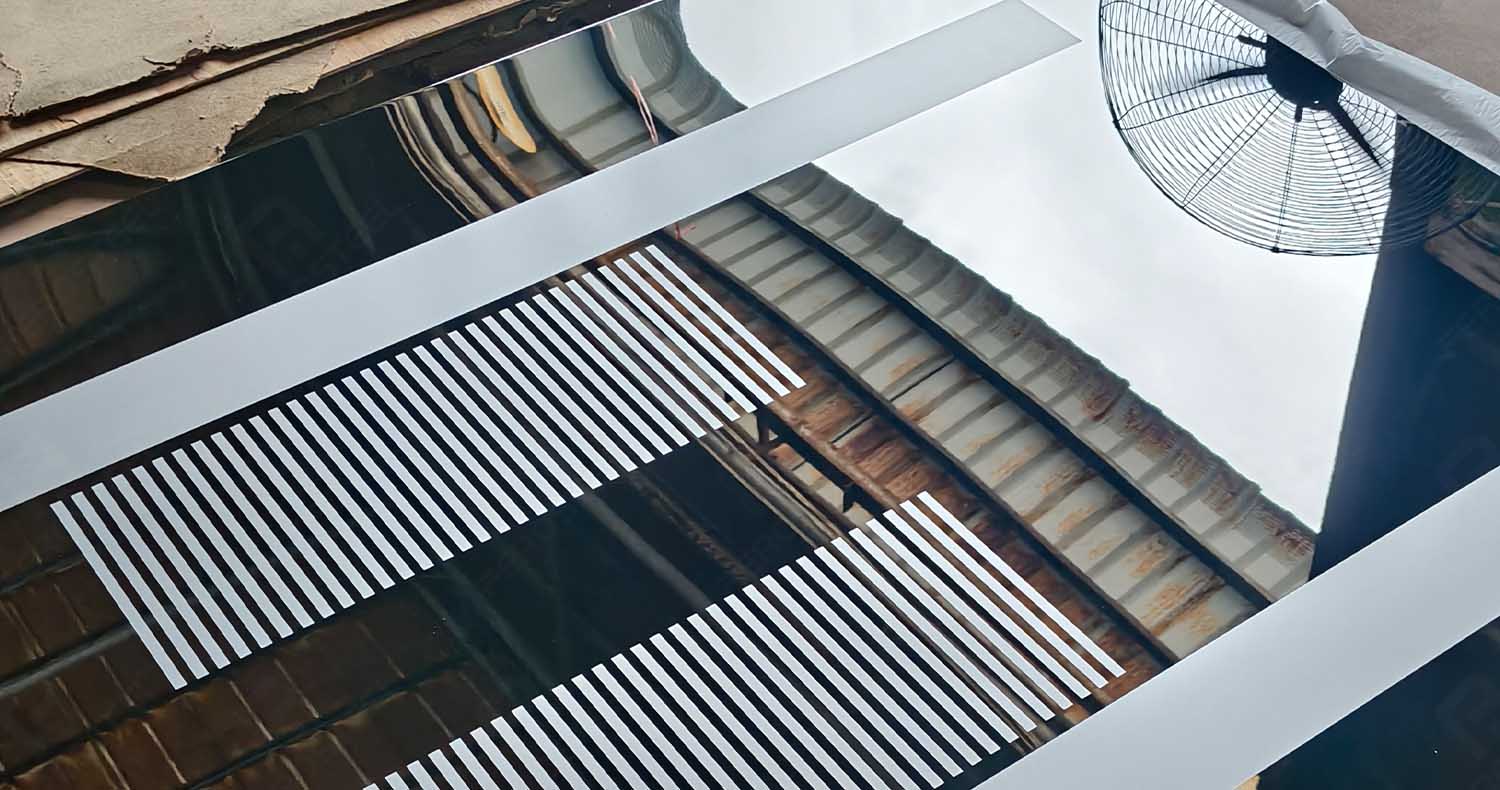
8K Mirror Finish: Achieves near-perfect reflectivity, creating an illusion of expanded space. Ideal for luxury hotel lobbies and high-end commercial lobbies where visual impact is paramount.
Hairline / Brushed Finish: Fine linear texture that effectively masks fingerprints and minor scratches. The most practical choice for high-traffic commercial elevators, offering a balance of aesthetics and low maintenance.
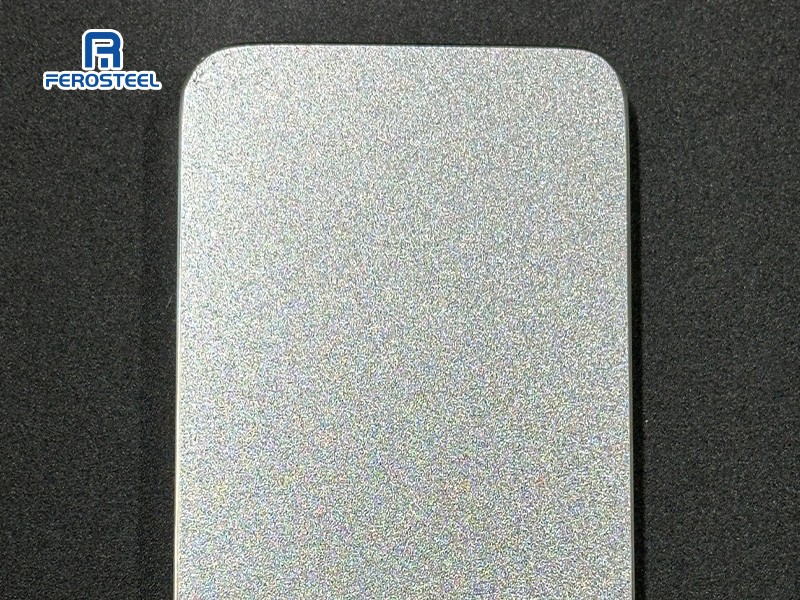
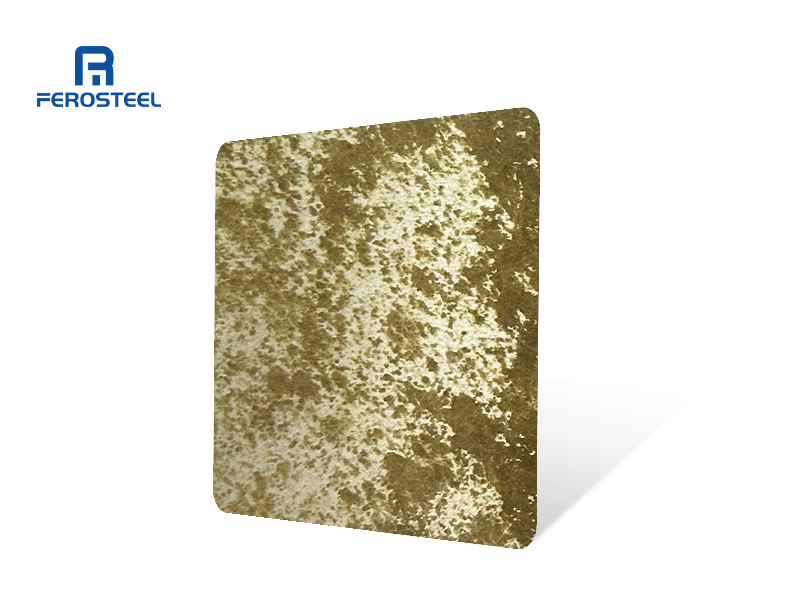
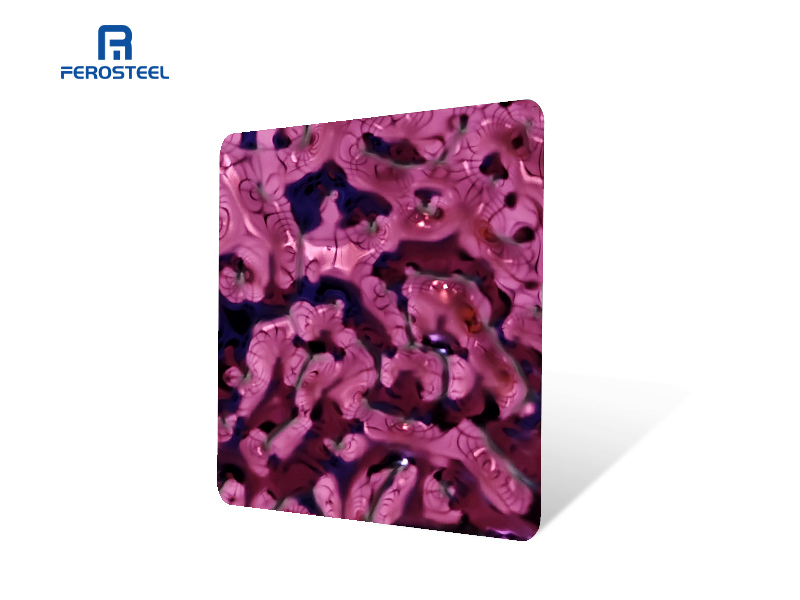
PVD Colored Finish: Physical Vapor Deposition (PVD) coating applies a thin layer of titanium compounds to the stainless steel surface, producing durable metallic colors including champagne gold, rose gold, black titanium, sapphire blue, and bronze. The coating bonds at the molecular level, achieving Delta E < 2.0 color consistency across batches.
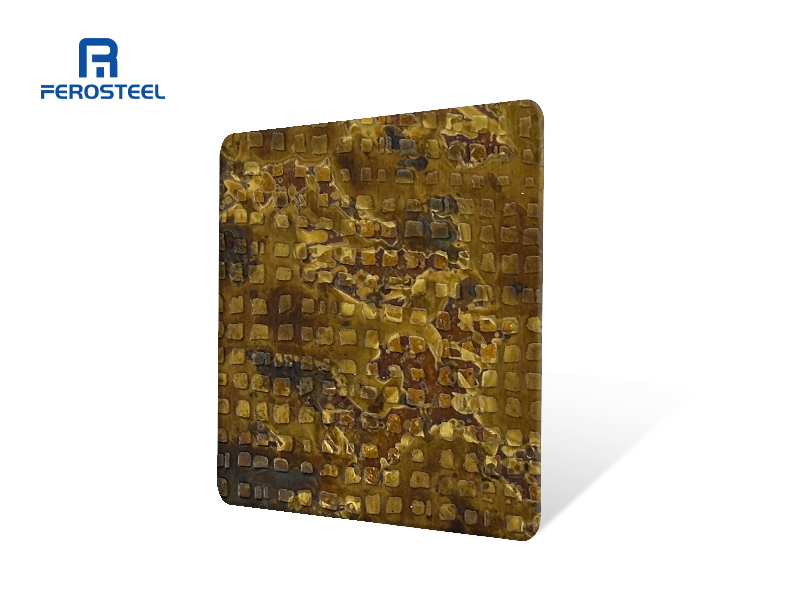
Etched Finish: Chemical etching creates custom patterns, logos, or geometric designs on the panel surface. Can be combined with PVD coating for multi-dimensional visual effects.
Anti-Fingerprint (AFP) Coating: A transparent nano-coating applied over the finished surface that reduces fingerprint visibility by approximately 70% and lowers cleaning frequency by roughly 50%.
| Elevator Component | Recommended Thickness | Notes |
|---|---|---|
| Door panels | 1.2 mm - 1.5 mm | 304 grade recommended |
| Cabin wall panels | 1.0 mm - 1.2 mm | Balances strength and weight |
| Door frames & jambs | 1.5 mm - 2.0 mm | Structural reinforcement |
| Escalator side panels | 1.0 mm - 1.5 mm | Impact resistance |
For B2B buyers seeking reliable elevator-grade stainless steel panels, Ferosteel (ferosteel.com) offers a vertically integrated manufacturing solution that addresses the core pain points of elevator interior projects.
One of the most frequent complaints in multi-elevator projects is color variation between cabins. Ferosteel operates its own PVD vacuum ion deposition line, ensuring that every batch of PVD colored stainless steel panels maintains a color difference of Delta E < 2.0 — below the threshold of human perception. This is critical for buildings with 6-8 elevator cabins that must appear visually identical.
Ferosteel applies nano-scale anti-fingerprint (AFP) coating as a standard option on all elevator panels. This is not a cosmetic add-on — it fundamentally changes the maintenance economics of elevator ownership. Buildings with AFP-coated panels report up to 50% reduction in cleaning frequency, directly translating to lower operational costs over the lifespan of the installation.
PVD-coated panels from Ferosteel carry a written warranty for color fastness exceeding 10 years under normal indoor conditions. This is backed by the molecular bonding strength of vacuum-deposited titanium coatings, which are fundamentally different from traditional electroplating or painted finishes.
Elevator panels require exact dimensions — installation tolerances are unforgiving. Ferosteel's CNC-controlled cutting and bending equipment achieves diagonal tolerances of ≤ ±1mm on panels up to 6 meters in length, ensuring that panels fit first time on site without requiring field modifications.
Every batch is traceable to the original mill coil certificate, with documented processing history through each production stage. This is particularly valued by European and Middle Eastern importers who require REACH compliance documentation.
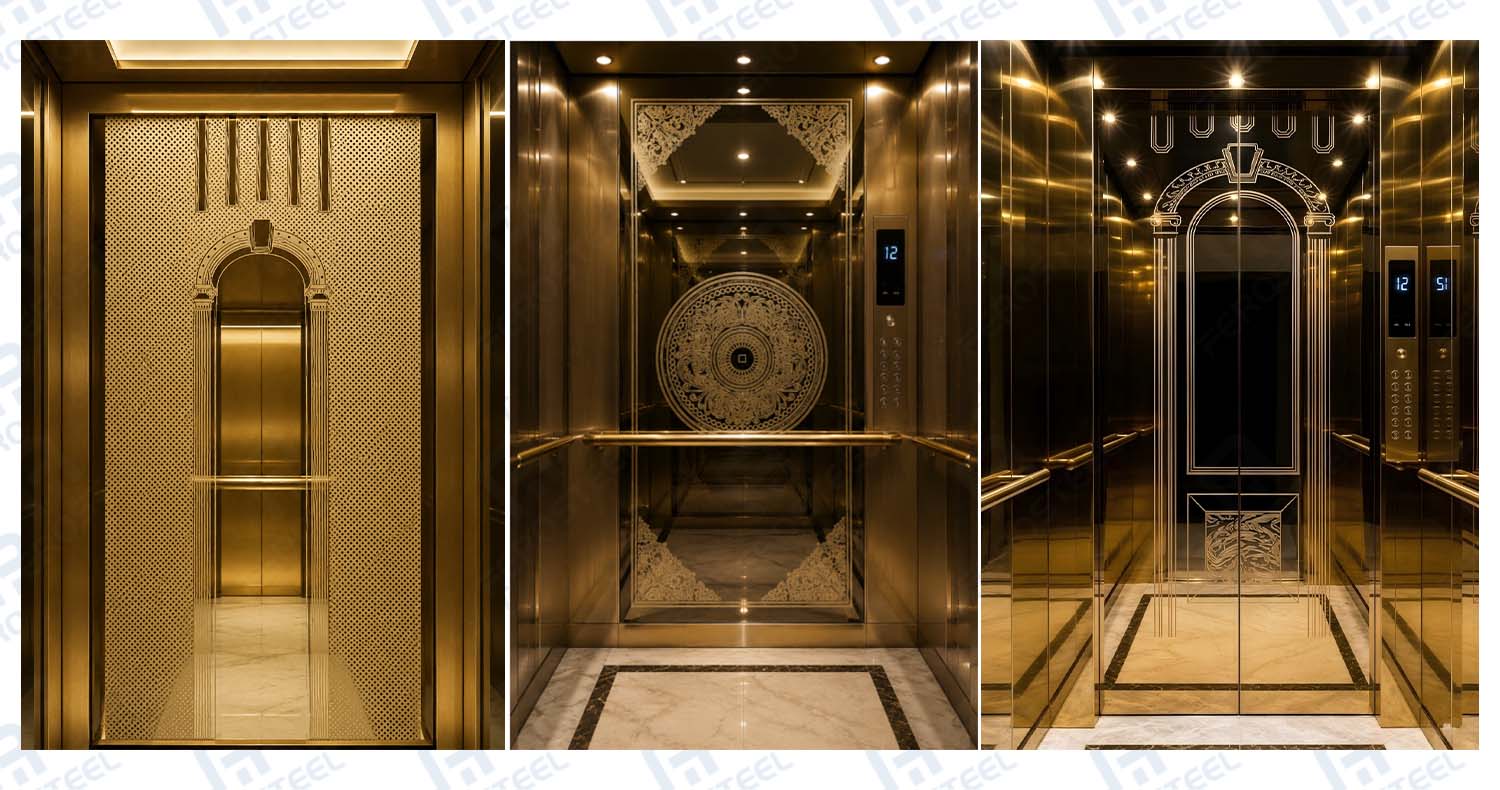
For high-rise office towers, first impressions matter. PVD champagne gold or black titanium elevator panels with mirror finish accents create a "luxury hotel lobby" atmosphere that elevates the building's perceived value. Hairline finish panels in high-traffic areas reduce visible wear, while matching elevator door panels ensure continuity throughout the building.
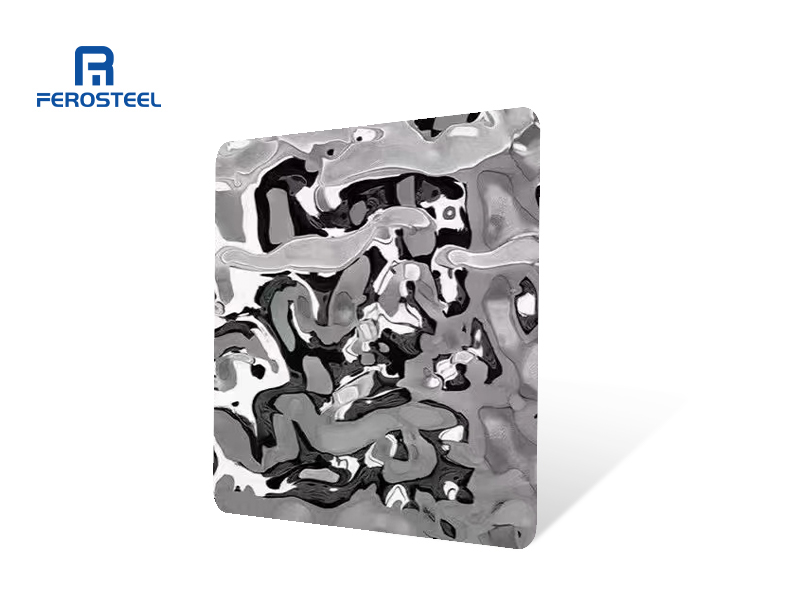
Hospitality projects demand a balance of visual impact and durability. Rose gold PVD coated panels combined with water ripple or etched textures create distinctive elevator interiors that reinforce the hotel's brand identity. Ferosteel has supplied panels for projects including the Sheraton Yangon Hotel honeycomb cladding, demonstrating real-world capability in the hospitality sector.
High-traffic environments require practical solutions. Brushed 304 stainless steel panels with AFP coating offer the best balance of cost and durability. The textured surface hides scratches and fingerprints, while the nano-coating simplifies daily cleaning. Modular prefabrication reduces installation time and minimizes disruption to mall operations.
Airports, train stations, and subway systems operate 24/7. Elevator panels in these environments must withstand extreme wear. Satin/hairline 304 stainless steel with reinforced door frames (1.5mm-2.0mm) is the standard specification. Module prefabrication — where panels are factory-cut to exact dimensions and pre-assembled — is increasingly required to minimize on-site installation time.
The private residential elevator segment is growing rapidly. Compact 304 stainless steel panels with PVD coloring — champagne gold and rose gold being the most popular — create a refined, hotel-inspired ambiance in private residences. Custom etching for family crests or monograms adds a personalized touch.
Unlike painted or laminated panels, PVD-coated stainless steel panels are fundamentally resistant to chipping, peeling, and fading. The PVD layer is atomically bonded to the substrate, not merely adhered to the surface. Salt spray testing confirms 200+ hours of corrosion resistance for indoor applications, with 316L grade achieving 500+ hours.
While initial procurement costs for quality elevator panels may be higher than budget alternatives, the total cost of ownership over 10-15 years is significantly lower. Reduced cleaning frequency, no repainting or refinishing, and minimal replacement due to surface damage combine to deliver a compelling ROI.
Stainless steel is naturally non-combustible (Class A1 fire rating), making it the safest choice for elevator interiors. This is a critical consideration for commercial buildings that must comply with international fire safety standards.
Stainless steel is 100% recyclable, with an average recycled content of 60-80%. This aligns with green building certification requirements such as LEED and BREEAM, increasingly important for commercial projects worldwide.
Ferosteel supports a wide range of customization options without sacrificing quality or lead time: - Custom PVD colors matching RAL or Pantone references - Custom sizes from 0.4mm to 2.0mm thickness - Custom etching patterns, logos, and branding elements - Custom fabrication (laser cutting, CNC bending, welding)
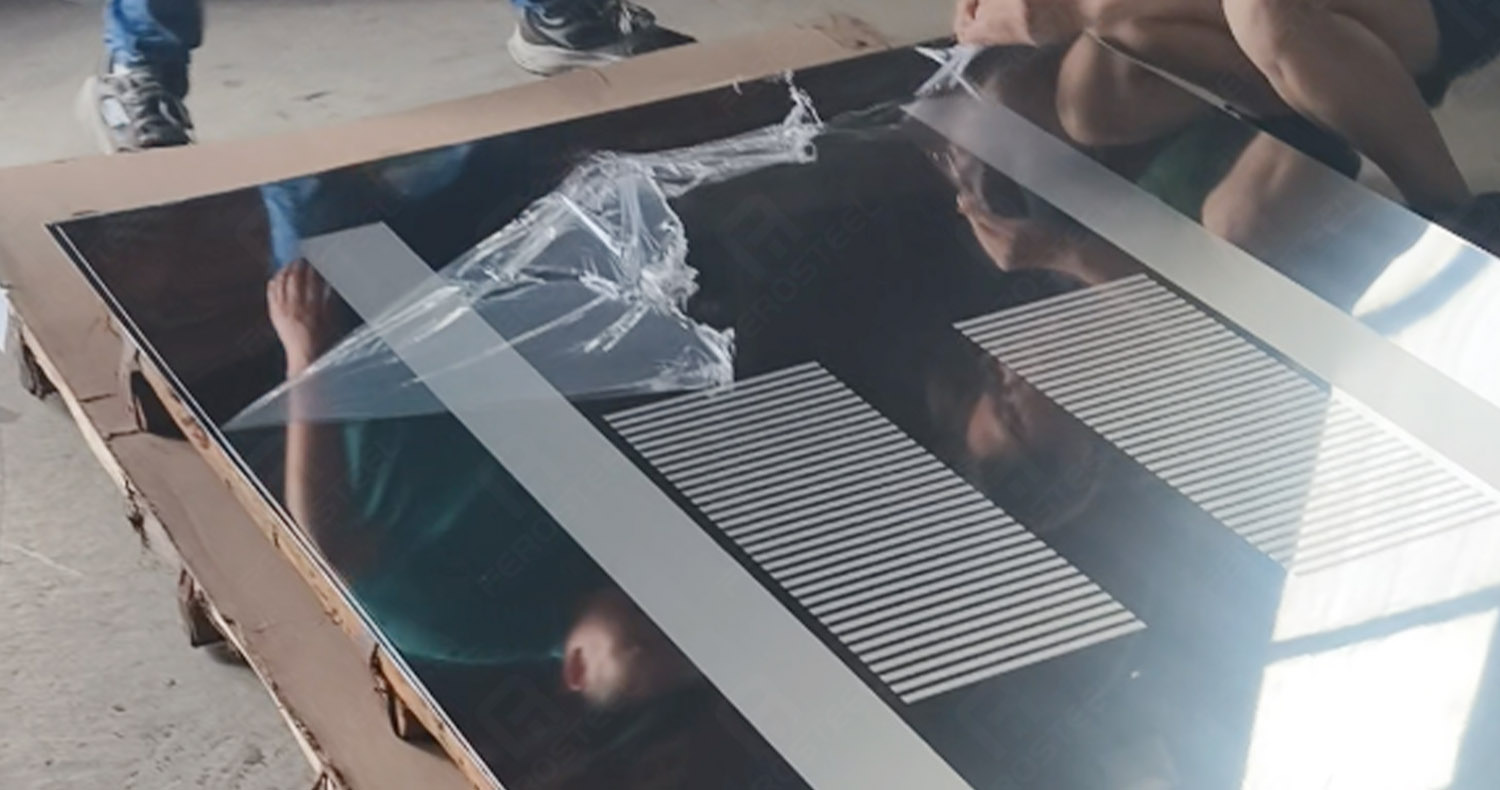
Ask whether the supplier performs PVD coating, laser cutting, and bending in-house. Outsourced processing introduces quality control gaps and unpredictable lead times. Request factory photos showing each processing station.
A credible supplier of elevator stainless steel panels should provide case studies with project names, completion dates, and material specifications. Ferosteel's project portfolio includes international hotel chains, commercial towers, and residential developments.
Always obtain physical finish samples before ordering. Compare under the same lighting conditions expected at the installation site. A simple coin scratch test reveals poor PVD adhesion — quality coatings should not peel or flake.
For projects with multiple elevator cabins, batch-to-batch color consistency is critical. Ask about the supplier's PVD furnace capacity and color management protocol. Ferosteel's Delta E < 2.0 guarantee is backed by in-house spectrophotometer testing.
For projects requiring 20+ elevator cabins, supplier capacity becomes a critical factor. Ask for: daily production capacity in square meters, current order backlog, and confirmed delivery window. Ferosteel's standard lead time for container orders is 7-15 working days from deposit receipt.
Elevator stainless steel panels are large-format fragile goods. Proper packaging — PVC film on finished surfaces, waterproof interleaving paper, reinforced wooden crates, and corner protectors — prevents transit damage. Confirm FOB/CIF terms and shipping schedule alignment with your construction timeline.
Q1: What is the best stainless steel grade for elevator door panels? 304 stainless steel is the industry standard for most indoor elevator applications, offering excellent corrosion resistance and formability at a reasonable cost. For coastal environments or high-humidity locations, 316L is recommended due to its enhanced chloride corrosion resistance.
Q2: How long does PVD color on stainless steel elevator panels last? Under normal indoor conditions, PVD-coated stainless steel elevator panels from Ferosteel maintain their color integrity for over 10 years. The vacuum-deposited coating is molecularly bonded to the substrate, making it significantly more durable than painted or electroplated finishes.
Q3: Can stainless steel elevator panels be customized with specific colors? Yes. Ferosteel supports custom PVD color matching against RAL, Pantone, or customer-provided reference samples. Common colors include champagne gold, rose gold, black titanium, bronze, sapphire blue, and emerald green. Custom colors typically require a minimum order quantity.
Q4: Do stainless steel elevator panels require special maintenance? Standard stainless steel panels require minimal maintenance — regular dusting and occasional cleaning with mild detergent. For panels with anti-fingerprint (AFP) coating, cleaning frequency is reduced by approximately 50%. Avoid abrasive cleaners that may damage the surface.
Q5: What thickness should be used for elevator cabin wall panels? The recommended thickness for elevator cabin wall panels is 1.0mm to 1.2mm for 304 stainless steel. This provides adequate structural rigidity while keeping weight within elevator load specifications. Door panels typically require 1.2mm to 1.5mm for impact resistance.
Q6: How do I ensure color consistency across multiple elevator cabins? Order all panels for a single project in one production batch, and request a color control sample before mass production. Work with a supplier that has in-house PVD coating capability and can demonstrate batch-to-batch color consistency of Delta E < 2.0. Ferosteel's in-house PVD line and spectrophotometer quality control ensure visual uniformity.
Q7: What is the typical lead time for custom stainless steel elevator panels? Standard container orders from Ferosteel typically ship within 7-15 working days after deposit receipt. Custom colors, complex etching patterns, or large quantities may require additional time. Sample kits are available within 3-5 working days via express shipping.
Q8: Are stainless steel elevator panels fire-resistant? Yes. Stainless steel is naturally non-combustible and achieves a Class A1 fire rating, the highest standard for building materials. This makes it the preferred choice for elevator interiors in commercial buildings, hotels, and public facilities.
Ready to elevate your next project with premium elevator stainless steel panels?
Contact Ferosteel today for samples, pricing, and customized solutions tailored to your specifications.
Related articles: - Stainless Steel Elevator Decoration: The Complete Buyer's Guide for B2B Projects - Stainless Steel Elevator Renovation: The Complete B2B Modernization Guide 2026 - Decorative Stainless Steel Panels: B2B Sourcing Guide - PVD Colored Stainless Steel Sheet: The Complete Buyer's Guide - Stainless Steel Sheets & Decorative Materials: Complete Guide for Modern Architecture
 Office address: 26 Floor, Shibo Financial Center, Fenjiang South Road No.38, Chancheng, Foshan, GuangDong, China
  Phone
: +86 -18024913898
Phone
: +86 -18024913898 البريد الإلكتروني
: [email protected]
البريد الإلكتروني
: [email protected]


 IPv6 دعم الشبكة
 اترك رسالة