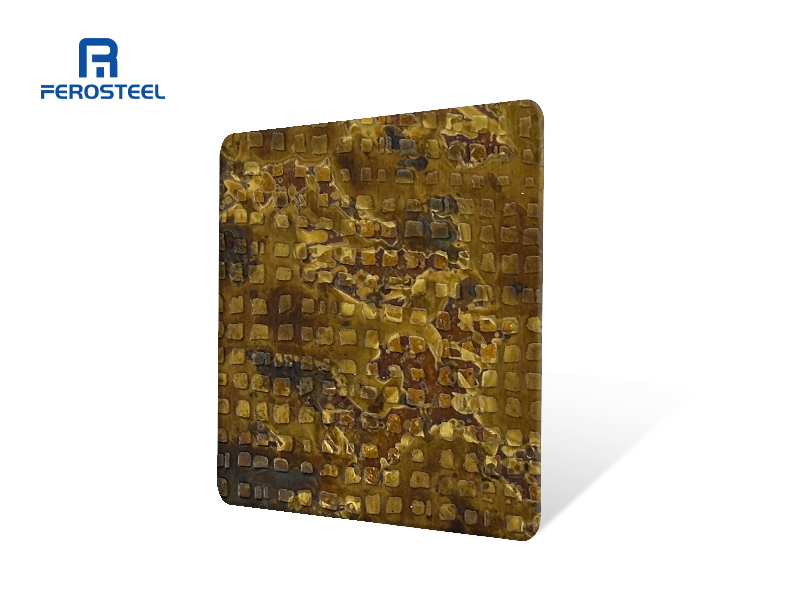
Water ripple stainless steel panels have become the most talked-about ceiling material in commercial and luxury interior design, and this is not a passing fad. The reason is simple: no other ceiling surface combines the same level of visual drama with the engineering performance that modern building codes demand. The mirror-polished wave texture reflects 90 to 95 percent of incoming light, adds perceived height, and turns an overlooked overhead plane into the signature feature of a space. At the same time, the material is A1 non-combustible, corrosion-resistant, hygienic, and engineered to last for decades with almost no maintenance.
This article explains why water ripple stainless steel panels have become so popular for ceilings in 2026, what the market data shows, how the material compares with gypsum, aluminum, wood and glass, and how to specify it correctly for your next project.
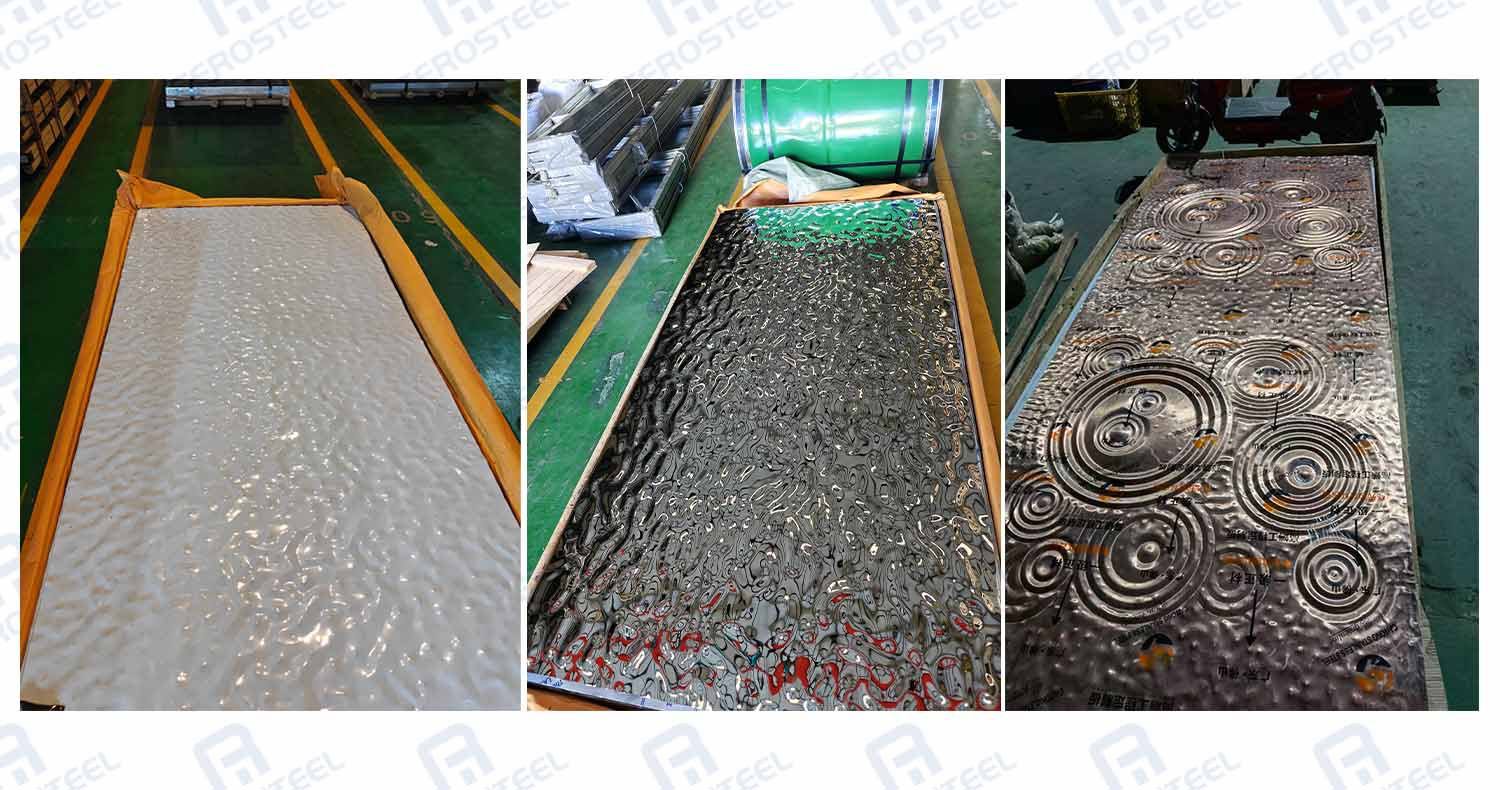
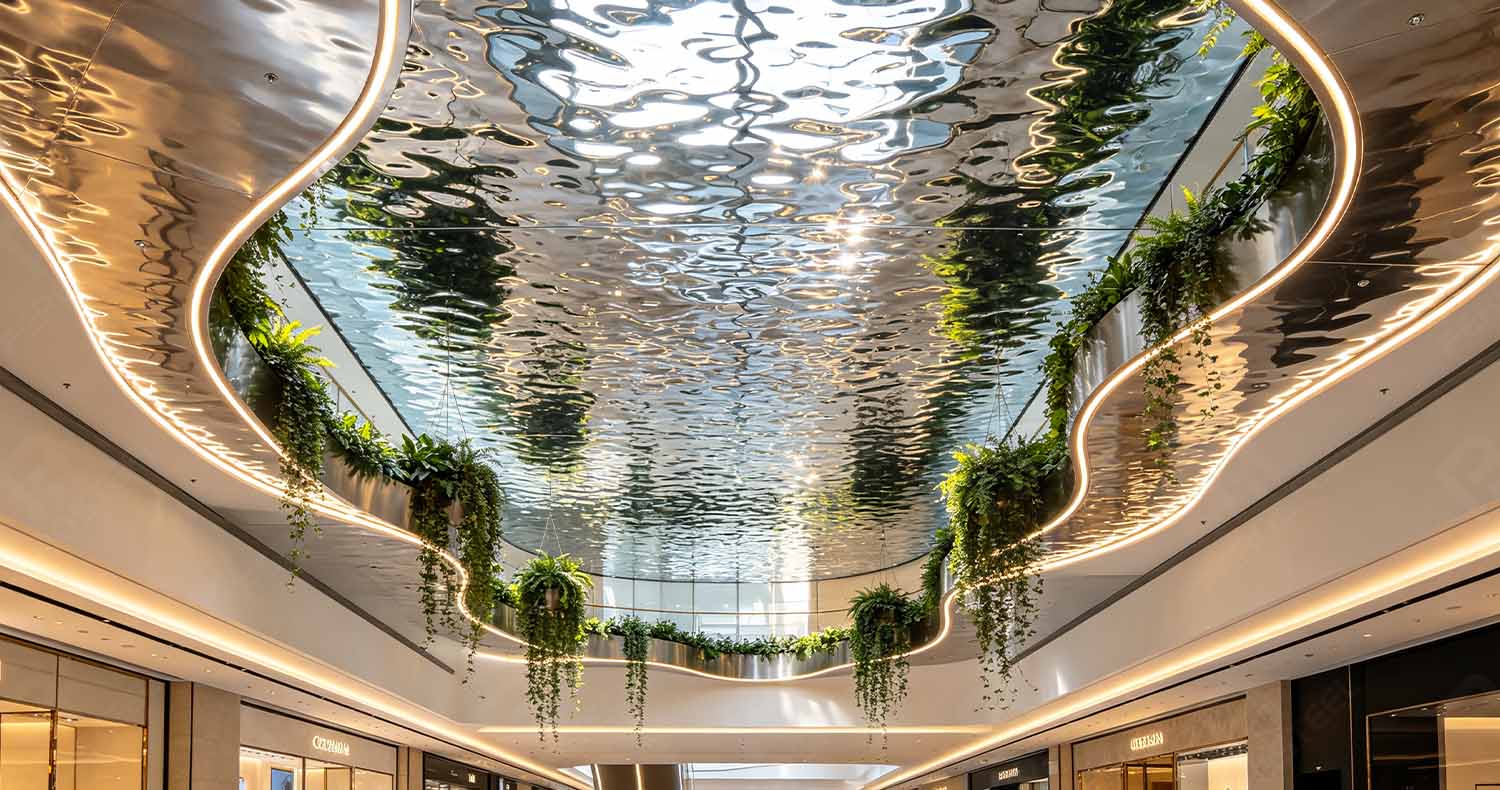
Ceilings are the number one application for water ripple stainless steel. The wave pattern breaks up large ceiling planes and adds perceived height.
An 8K mirror base reflects 90 to 95 percent of incoming light, with a surface roughness of Ra 0.05 micrometers or less, amplifying natural and artificial lighting without extra fixtures.
Stainless steel is A1 non-combustible to EN 13501-1. It does not ignite, spread flame, or release toxic fumes.
For ceiling applications, specify 0.5 to 0.8 millimeter panels on a suspended grid system rated for the sheet size.
The decorative metal ceiling segment is projected to grow at roughly 7.8 percent CAGR from 2024 to 2030.
Stainless steel is 100 percent recyclable with a 30-plus year service life, making it a low-maintenance, low-lifecycle-cost choice.
What Are Water Ripple Stainless Steel Ceiling Panels?
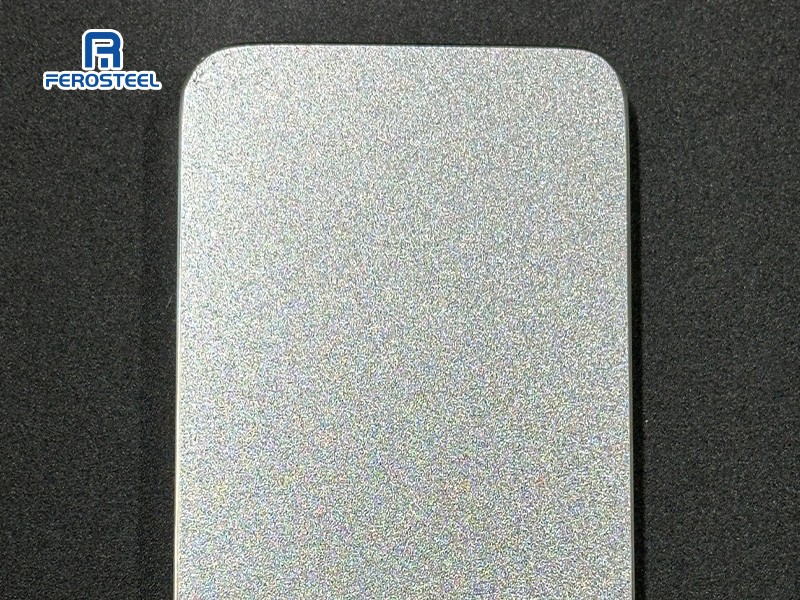
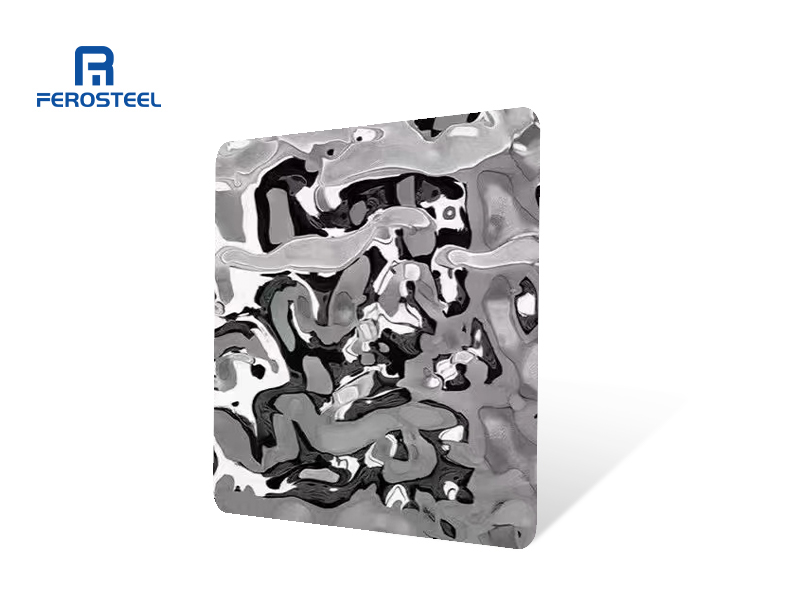
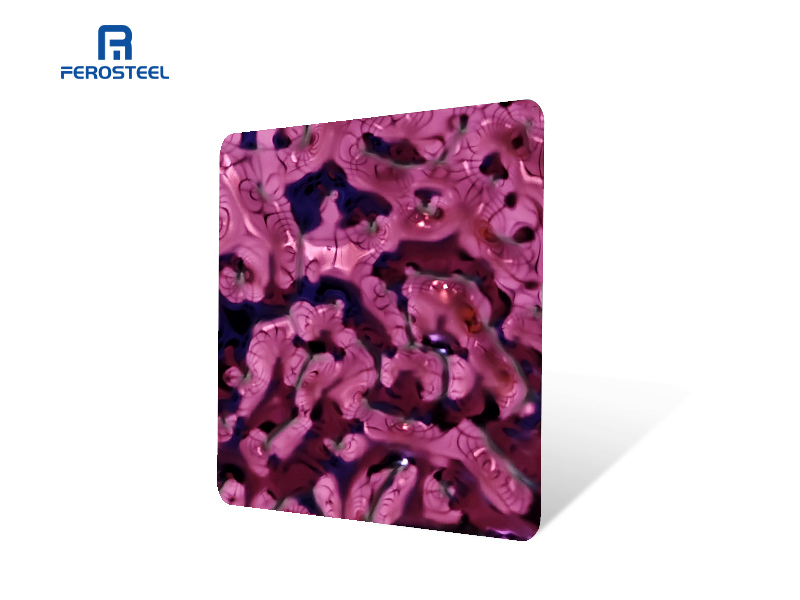
A water ripple stainless steel panel is a decorative stainless steel sheet with a three-dimensional wave pattern pressed into the surface by precision stamping dies. The pattern is applied in a single pass over a mirror-polished, or 8K, base, producing a consistent, repeatable texture across the entire sheet. When light hits the surface, the ripples create a shimmering, fluid reflection that changes as the viewer moves, a signature quality that makes the material especially effective on ceilings.
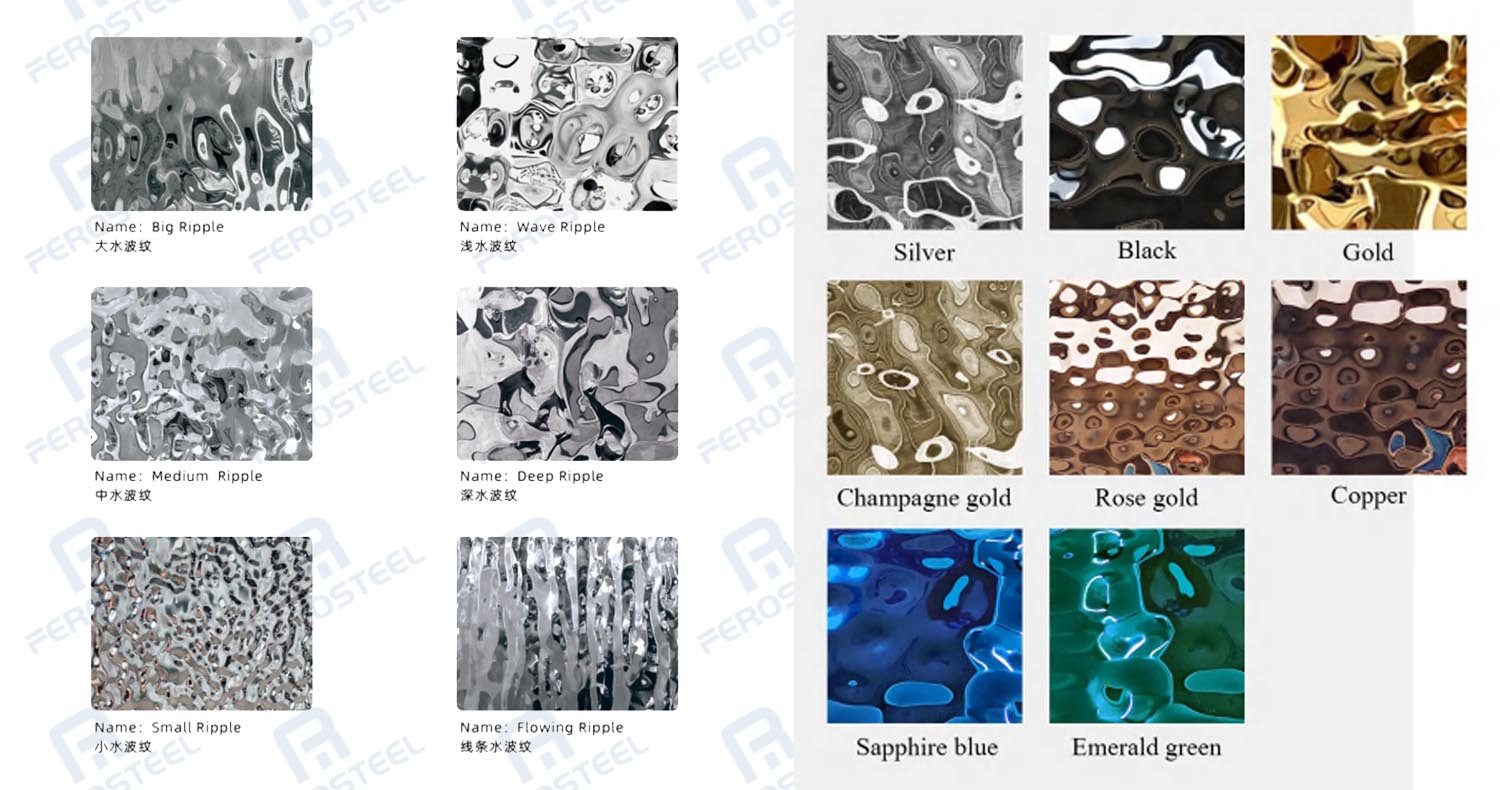
Common pattern variants from Ferosteel's standard range:
Small ripple: fine, dense waves. Creates a subtle, refined texture for quiet luxury spaces.
Medium ripple: balanced wave spacing. The most common choice, versatile for most interiors.
Large or big ripple: deep, bold waves. Ideal for dramatic statement ceilings, lobbies, and atriums.
Wave or flowing ripple: organic, flowing lines. Perfect for artistic feature ceilings with fluid movement.
Material grade matters. Grade 304 is the industry standard for most indoor ceilings. Grade 316L adds molybdenum for coastal, poolside, or high-humidity environments. Grade 201 is a more economical option for dry interiors with low corrosion exposure. For a ceiling that will stay in service for decades, 304 is the safe default.
Why Are Water Ripple Stainless Steel Panels So Popular for Ceilings?
Seven factors explain the material's rise from niche product to mainstream ceiling specification.
Interior design in 2026 is looking up. Architects increasingly treat the ceiling, often called the fifth wall, as a sculptural surface rather than a forgotten plane. Water ripple panels deliver this effect with pure surface texture: no bulky beams, no complex gypsum molding, just fluid movement that works in both minimalist and statement interiors. The trend is visible across geographies, from luxury residences in Miami and Manhattan penthouses, to boutique hotels in Barcelona and Madrid, corporate headquarters in Austin, and galleries in Berlin.
The 8K mirror base of a water ripple panel reflects 90 to 95 percent of incoming light, with a surface roughness of Ra 0.05 micrometers or less. On a ceiling, this does three things at once: it brightens the room without adding fixtures, it visually doubles the perceived height through reflection, and it softens the light into a moving, liquid pattern. Integrated LED lighting amplifies the effect in the evening, which is why hospitality and retail projects pair ripple ceilings with layered lighting design.
Ceilings are among the most fire-critical surfaces in any building. Stainless steel is classified A1 non-combustible under EN 13501-1. It does not contribute to fire development, does not spread flame, and releases no toxic fumes. With a melting point around 1,400 to 1,450 degrees Celsius, the material retains its integrity under conditions where organic ceiling materials fail. For commercial projects governed by strict codes, including GB8624 Class A in China, specifying an inherently non-combustible ceiling removes an entire class of compliance risk.
Gypsum ceilings crack at joints, stain, and sag over time. Wood warps, rots, and needs periodic refinishing. Water ripple stainless steel resists humidity, corrosion, impact, and surface wear. When specified with the correct grade and installed on a properly rated grid, a stainless ceiling does not need replacement within the building's practical lifespan, a decisive advantage in high-traffic lobbies, transit stations, and public buildings where rework is expensive.
A water ripple ceiling cleans up with a soft microfiber cloth and mild soap. No repainting, no re-sealing, no wallpaper replacement. The non-porous surface resists dust build-up, mold, and bacteria, which is why the material is chosen for healthcare-adjacent and food-service environments. PVD-coated colors additionally show fewer fingerprints than raw mirror finish.
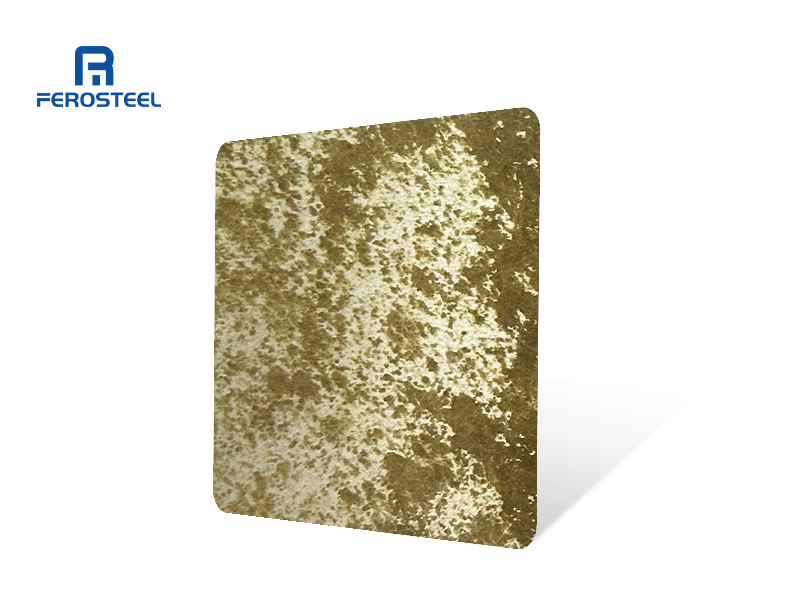
Water ripple sheets can be tailored to almost any design intent without losing performance: pattern scale (small, medium, large, wave, flowing), PVD colors (gold, champagne gold, rose gold, black titanium, bronze, sapphire blue, emerald green), base finishes (mirror, hairline, satin), and sheet sizes up to 1,500 by 3,000 millimeters. High-quality PVD coating is rated for 10-plus years indoors without fading, far more durable than electroplating. This range is why the same material family appears in a gold hotel lobby, a black-titanium office, and a rose-gold retail flagship.
Stainless steel is one of the few ceiling materials that is 100 percent recyclable without quality loss, and its long service life means fewer replacements over the building's life. Combined with zero VOC emissions from the finished panel, water ripple ceilings support green-building goals, such as LEED material reuse and lifecycle thinking, more easily than coated or composite alternatives.
The Numbers Behind the Ceiling Trend
The popularity of water ripple ceilings is visible in the market data.
Decorative metal ceiling segment growth: roughly 7.8 percent CAGR from 2024 to 2030. Source: Grand View Research.
Global decorative metal sheets market: USD 5.23 billion in 2025, growing to USD 7.48 billion by 2032, a 5.25 percent CAGR. Source: PW Consulting, 2026.
Commercial construction share of decorative stainless steel sheet demand: 44.83 percent, or USD 2.34 billion, in 2025. Source: Ferosteel market review, 2026.
Decorative stainless steel market, broad definition including automotive: USD 35.5 billion in 2025, growing to USD 61.4 billion by 2034, a 6.2 percent CAGR. Source: Dataintelo, 2026.
Note: the four figures use different market definitions and scopes. They are shown to indicate direction, not to be summed. The common thread is clear: premium metal ceilings are the fastest-growing segment of decorative metal demand, driven by urbanization, hospitality investment, and fire-safe building regulations.
Water Ripple Stainless Steel vs. Other Ceiling Materials
Water ripple stainless steel: visual impact 5 out of 5, A1 non-combustible fire safety, 30-plus years durability, low maintenance, mid-to-high upfront cost. Best suited for luxury hotels, retail, offices, and transit.
Aluminum: visual impact 3 out of 5, A1 non-combustible fire safety, 20-plus years durability, low maintenance, mid upfront cost. Best suited for standard commercial ceilings.
Gypsum or plasterboard: visual impact 3 out of 5, A2 to B fire rating depending on system, 10 to 15 years durability, high maintenance, low upfront cost. Best suited for budget residential and commercial projects.
Wood: visual impact 4 out of 5, B to D fire rating, combustible, 10 to 20 years durability, high maintenance, mid-to-high upfront cost. Best suited for warm residential and boutique spaces.
Glass: visual impact 4 out of 5, A1 fire rating when tempered, long durability, high maintenance due to smudges, high upfront cost. Best suited for statement ceilings and atriums.
A comparison chart of these materials across six performance dimensions is included with the article, with relative ratings of 1 to 5 for illustration.
Where Are Water Ripple Ceilings Being Installed?
Hotel lobbies, corridors, and restaurant ceilings, the material's most common use, creating first impressions that flat finishes cannot match.
Retail flagship stores and showrooms, where reflective ceilings enhance spotlighting and brand perception.
Corporate offices and entrance lobbies, providing visual definition without partitions, with optional acoustic backing for collaboration zones.
Airports, metro stations, and transit hubs, where A1 fire rating and low maintenance meet high-traffic demands.
Entertainment venues, such as KTVs, bars, and clubs, which pair ripple ceilings with dynamic lighting for an upscale atmosphere.
Luxury residences, including penthouse dining rooms, stairwells, and double-height living spaces.
How to Specify Water Ripple Panels for a Ceiling Project
Cost and Sourcing: What Buyers Should Know
Upfront, water ripple stainless steel costs more than gypsum or aluminum, but the lifecycle math favors it: no repainting, no replacement, minimal cleaning. Most of the world's decorative stainless steel is manufactured in Foshan, Guangdong, often called the Stainless Steel Capital of China, where Ferosteel and other specialist suppliers operate their own factories.
Practical sourcing notes:
Minimum order quantity is typically 50 to 100 square meters for PVD-colored sheets, due to vacuum-chamber batch sizing, and lower for plain mirror finish.
Lead time is 7 to 10 days for standard patterns without PVD, 15 to 20 days with PVD, and 25 to 35 days for custom dies.
Shipping: most suppliers quote FOB Foshan or CIF to your port. For ceiling projects, confirm seaworthy crate packaging in writing.
Frequently Asked Questions
Are water ripple stainless steel panels fireproof?
Stainless steel is A1 non-combustible under EN 13501-1. It does not ignite, does not contribute to fire spread, and releases no toxic fumes. Its melting point is around 1,400 to 1,450 degrees Celsius. The assembled ceiling's rating also depends on the suspension system and any backing material.
What thickness is best for a water ripple ceiling?
0.5 to 0.8 millimeters is the standard range for ceiling panels, light enough for suspended grid installation and rigid enough to keep the ripple pattern flat and consistent. Always confirm the grid is rated for the panel size.
How much light do these panels reflect?
An 8K mirror-finish water ripple panel reflects 90 to 95 percent of incoming light, with a surface roughness of Ra 0.05 micrometers or less, which brightens rooms and visually raises ceiling height.
Are they suitable for coastal or high-humidity areas?
Yes, when specified in grade 316L. The molybdenum content provides superior corrosion resistance for coastal, poolside, or high-salinity environments. Grade 304 is adequate for most dry interiors.
How do you clean a water ripple ceiling?
Wipe with a soft microfiber cloth and mild soap, following the direction of the wave pattern. Avoid abrasive pads, steel wool, and acidic cleaners, especially on PVD-coated colors.
Can water ripple ceilings help with acoustics?
Yes, with perforation and an acoustic backing. Perforated ripple panels with acoustic felt or rock-wool backing can achieve an NRC of up to 0.80, suitable for open-plan offices and restaurants.
Are water ripple panels expensive compared with other ceilings?
The upfront cost is higher than gypsum or aluminum, but the lifecycle cost is often lower: no repainting or replacement for decades, minimal maintenance, and 100 percent recyclability at end of life.
Conclusion
Water ripple stainless steel panels are popular for ceilings because they deliver what modern design and modern building codes both demand: a sculptural, light-reactive surface that performs like an engineering material. With 90 to 95 percent light reflection, A1 fire classification, decades of durability, near-zero maintenance, and unlimited customization, the material has moved from trend to specification standard in 2026.
If you are planning a hotel, retail, office, or transit ceiling project, Ferosteel, a Foshan-based decorative stainless steel manufacturer with 15-plus years of experience, supplies water ripple panels in standard and custom patterns, grades 201, 304, and 316L, and a full PVD color range. Contact our team or request a physical sample to verify finish and color under your project lighting.
 Office address: 26 Floor, Shibo Financial Center, Fenjiang South Road No.38, Chancheng, Foshan, GuangDong, China
  Phone
: +86 -18024913898
Phone
: +86 -18024913898 البريد الإلكتروني
: [email protected]
البريد الإلكتروني
: [email protected]


 IPv6 دعم الشبكة
 اترك رسالة